When selecting airplane seats for toddlers and babies, there are different pros and cons to your placement on the plane to consider.
I always select my family’s seats when I purchase our plane tickets. If you have not yet booked your tickets, check out my post on choosing flights for babies and toddlers. Make sure you buy a ticket type that will allow you to select your seats in advance. You do not want to leave your seat assignment up to availability or the gate agent when you are traveling with little kids. And this comes from a girl who saw a lot of the world for years through standby travel. I can sit in any available airplane seat. A 2 year old cannot.
Here are the things I consider as I am selecting airplane seats for my family, as well as some pros and cons that we have experienced in different areas of the plane.
First, A couple questions to ask…
Are you bringing a car seat?
It is important to think about what car seats you might be bringing with you as you are selecting your airplane seats. I always suggest checking the airline’s website to confirm its car seat policies.
US airlines will require that the car seat be FAA approved (there will be a sticker on your car seat). Flight attendants have always asked us to place our car seat in the window seat. For two kids, your airline may allow the carseats side-by-side in a window and middle seat. Some airlines, however, require you to have every car seat in a window seat. Again, confirm your airline’s policies. The FAA prohibits using car seats anywhere that might impede an emergency evacuation, such as the aisle or exit row seats. You will want to make sure you select a seat that is compatible with your car seat.
Would you like to use the airplane bassinet?
The airplane bassinet is a really nice feature that airlines offer for infants on some longer flights. Every airline and airplane is different. Bassinets are not available on all flights and may not be an option in all cabins. If you are interested in using the airplane bassinet, ask your airline if there are bassinets on your flight and where you will need to be seated.
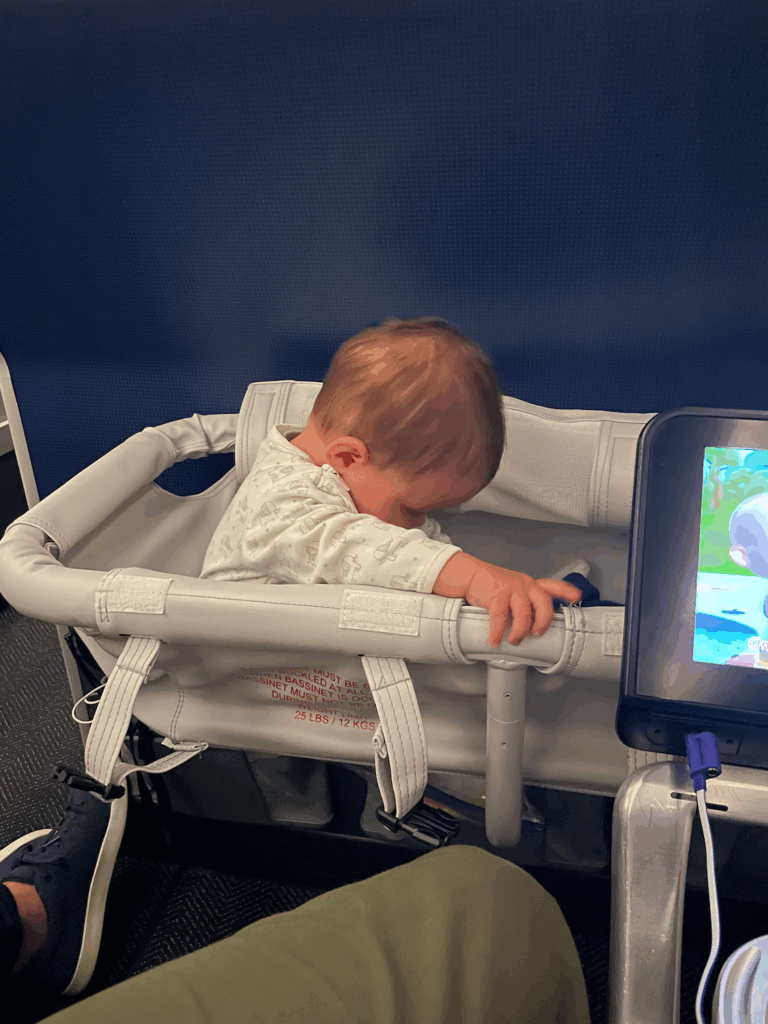
On long flights, it can be really nice to have a place to lay your baby down – especially if you are also taking care of other children. The main drawback of the airplane bassinet is that you can’t have you baby in the bassinet during takeoff, landing, or turbulence. If you hit turbulence while your child is asleep in the bassinet, you will have to take them out of the bassinet, which might wake them up.
Bassinet seats are often only available in premium classes or in bulkhead seats in economy. Those seats usually cost more. There are also certain limitations of the bulkhead seats that I find inconvenient when traveling with little kids (see more on this below). The added expense of snagging the bulkhead seat and the limitations of that seat may not be worth it if you are traveling with more than one child.
Some airlines don’t allow you to reserve the bassinets. They are first come first serve. So make sure you know whether you need to reserve the bassinet in advance or request it at the gate. Then, remind the flight attendants when you board that you would like to use a bassinet.
Now let’s talk pros and cons of the various seat options…
Bulkhead Seats
The bulkhead seats are the seats facing the partition wall that separates a cabin from other sections of the plane. Bulkhead seats aren’t always the best airplane seats for families with little children. Often these seats have no under-seat storage because there is not a row of seats in front of them. Passengers sitting in the bulkhead with no under-seat storage are required to stow their bags in the overhead compartments. This means you won’t be able to easily access your diaper bag, snacks, and activities.
Another limitation of bulkhead seats is that often the screens for the bulkhead seats pop out from within the armrest because there is no seat in front of the passenger to place the screen on. This means the armrests may be fixed and cannot be raised. We discovered this inconvenience on a redeye when we were not able to lift the armrest to let our toddler lay across our laps.
Finally, the bulkhead seats are usually closer to the sounds and smells of a galley or lavatory and more activity overall. The commotion and noises may make it harder to get your kids to sleep on a long or overnight flight.
There are two big benefits to bulkhead seats: extra leg room and the ability to use a baby bassinet if they are offered on your flight. The extra leg room is nice. You don’t have to constantly watch your children’s legs to make sure they aren’t kicking the seat in front of them. The bassinet can also be helpful (see above for more on the airplane bassinet). But for my family these two benefits don’t necessarily outweigh the cons of bulkhead seats.
Back of the plane
You will likely find the cheapest flights at the back of the plane. Other families with children are often seated toward the back as well if you are looking for a little camaraderie. And you will be far from business class or premium seats where you might feel some additional pressure to be extra quiet.
But getting off the plane can take a while when you are at the very back. The relatively short time between landing and walking off the plane is sometimes a tough time for my family. My kids know we have arrived and they just want to get off the plane! Now! And once the seatbelt sign comes off and people start standing up, my kids’ wiggles get released and it is harder to contain their excitement.
Also, if you are connecting flights and it as at all tight, you may wish you weren’t at the back of the plane. If you gate-checked a stroller or carseat, however, it might not matter because you will have to wait for your gate-checked items anyway.
Upgrading to Business Class
If you have the opportunity to upgrade to business class, know there are pros (obviously) and cons to taking the upgrade. Upgrading is tricky if you have young kids because your upgraded seats may not be next to each other. We have chosen to not put our names on the upgrade list before because it was just easier to have the seats we had pre-selected next to each other.
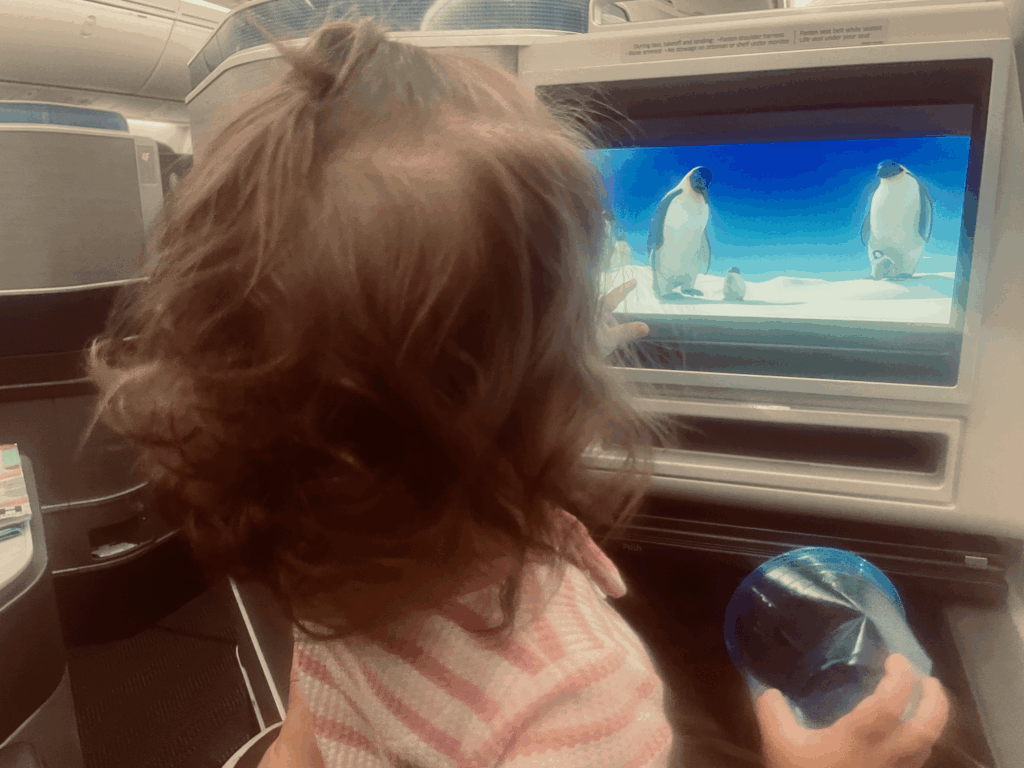
Also, the way business class seats are configured on some airplanes makes it more difficult to help your young children when you are buckled in your seats, even if you are sitting next to each other.
Meal service tends to take a long time in business class. If you are on a redeye, this can make it harder to get your kids to sleep. On some airlines, you can ask for an expedited meal service in business class, but the overhead lights often stay on longer in business class than in coach.
Finally, there is additional pressure to keep your children extra well behaved in business class. A flight attendant once suggested to me as I settled into my business class seat with my lap child that, if my child were to get fussy on the flight, we should go walk around back in coach.
The obvious pros of business class are the lie-flat seats on long-haul flights, abundant food and beverages, and getting to watch your tot devour an ice cream sundae 30,000 feet in the air.
Exit Row Seats
You can’t sit in exit row seats with little kids. The booking software should not let you select those seats. But if you are booking through a third party or for some reason those seats aren’t blacked out, know that US airlines and the FAA prohibit those under age 15 from sitting in the exit row. Confirm the exact age and other restrictions on the airline’s website. Passengers in exit rows must be able to assist in the case of an emergency.
Window vs Aisle Seats
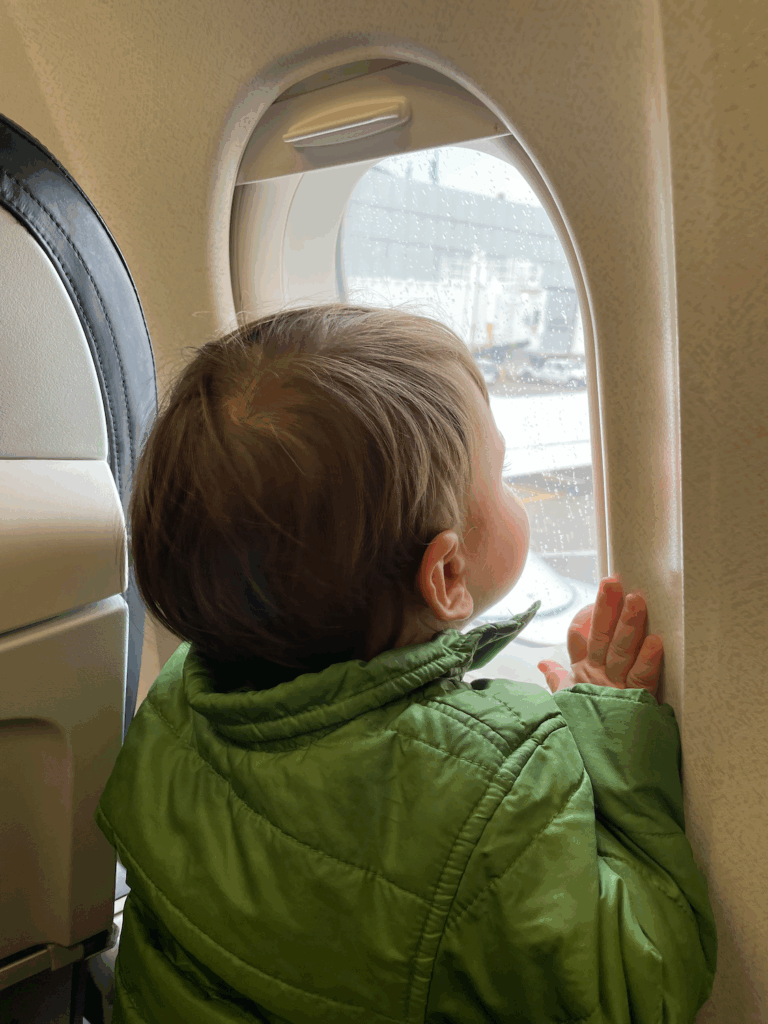
At this point, our family fills enough airplane seats that we get both window and aisle seats. But if I were flying solo with one young child, I would choose the window and middle seats over middle and aisle seats. The window seat is more entertaining for little kids. And if they fall asleep, they are less likely to be disrupted by passing people and meal or beverage service.
If you have a potty training child, however, consider how many times you may need to get up to use the restroom and whether it is more courteous to your neighbor to have the aisle seat.
Finally, who sits by who?
Let kids sit next to each other or separate them?
Once you have selected your seats, packed your bags, made your way through the airport, and are boarding the plane, there is one more thing to consider: who sits next to who?
In private settings, I am pretty hands off with my kids. I leave them to play together and work out their own disagreements without much oversight to the extent they are developmentally capable of doing so. But in public spaces, and especially on airplanes, we run a pretty tight ship.
I prefer to have an adult between each child on the airplane. This minimizes squealing laughter, rowdy play, and fighting. Our kids are far from quiet. People who know them well would strongly agree with that statement. But on airplanes, you would have no idea. We expect quiet, calm behavior from them.
We bring quiet activities and individual entertainment for our children. If there is a screen at their seat, my children, who don’t get much screen time at home, are usually happy to sit still and watch something. Or they will listen to audio stories. My husband and I focus on entertaining the youngest one(s) or walking the plane with them. We have learned the hard way that it is best to let the kids know where they will be sitting before boarding the plane. Communicating this ahead of time can help prevent a fight over seats on the plane.
I hope you found this discussion of the pros and cons of the various airplane seats helpful. For help packing your young family, check out my packing tips for trips with young kids. Safe travels!