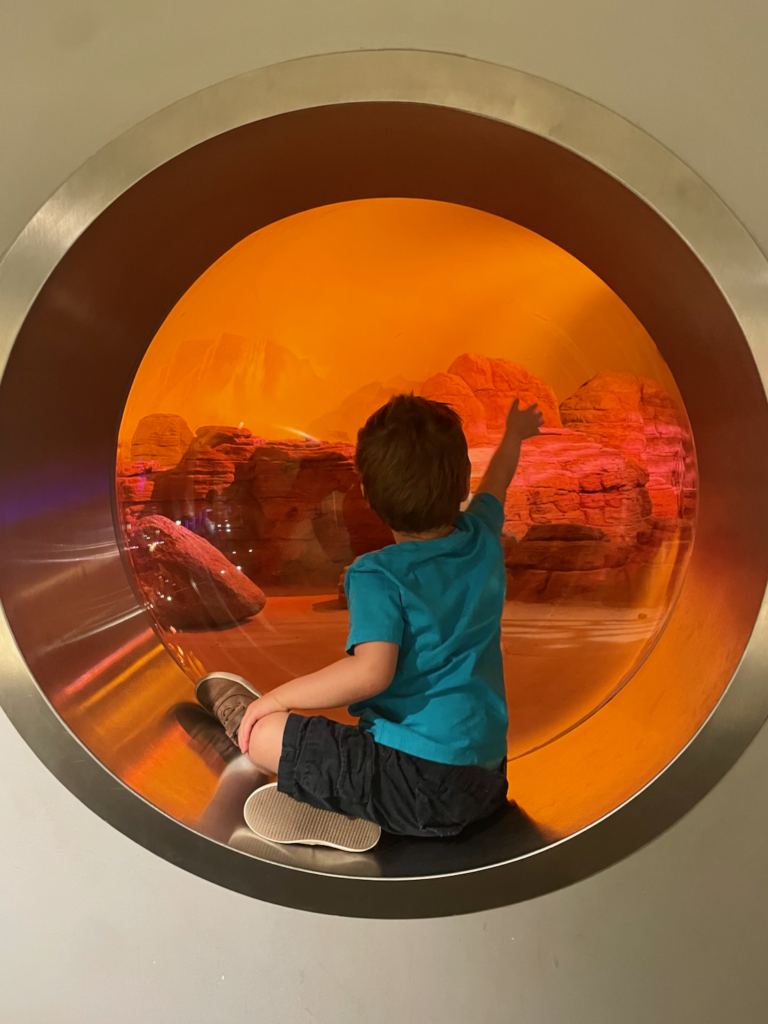
Visiting museums and historical sites with babies, toddlers, and young kids can be more of a joy than you might expect. Here are some tips to make your trip to a museum or historical site enjoyable.
1. Pick the right place
When you just have a baby, you can make almost any place work if you time it right with a nap. Now that we have some non-nappers, we may still choose to visit a site or museum during nap time so that the youngest can sleep. But I have to be mindful of how engaging the place is for our older children. Depending on a child’s temperament, maturity, and level of curiosity, they may not find certain museums or sites all that interesting. My husband and I have accepted that days spent in fine art museums may not be the best option for our family in this season of raising little kids. And that is ok. If your dream trip to Florence involves hours spent each day in art museums, maybe save that trip for another time. This season will not last forever.
But even places like art museums and grand palaces full of breakable relics can be a worthwhile stop if you go in with the right mindset and plan. Our kids constantly surprise my by what they soak up from places that aren’t necessarily geared toward children.
2. Pick the right time of day
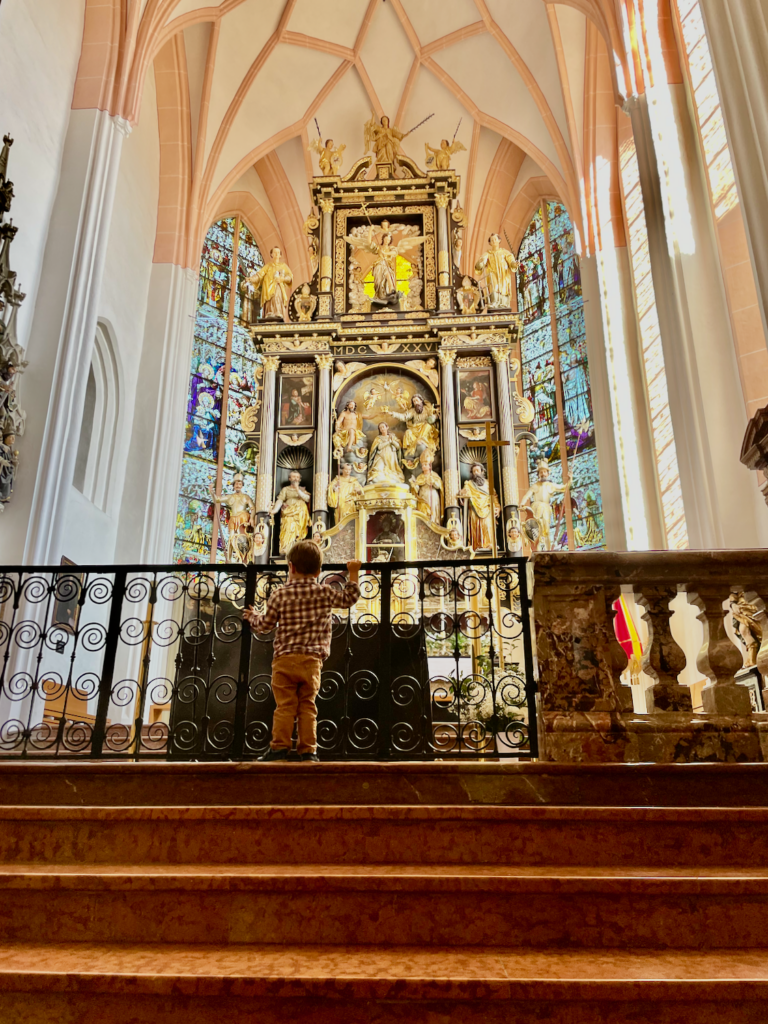
Picking the right time of day is probably the biggest key to a successful trip to a museum or historical site. Know your family rhythms. If you have a highly rambunctious toddler, mid-morning when they are at peak energy level might not be the best time to take them to a place where they need to be calm and quiet.
Alternatively, if the visit will require some energy expenditure, mid-morning might be a great time. Especially if you have toddlers-preschoolers that you would really like to share the experience with. We try to pick a time when our kids will have energy and not be hungry or cranky. For us, that is morning, after breakfast, until lunch. We can still offer a snack on the go to keep everyone happy.
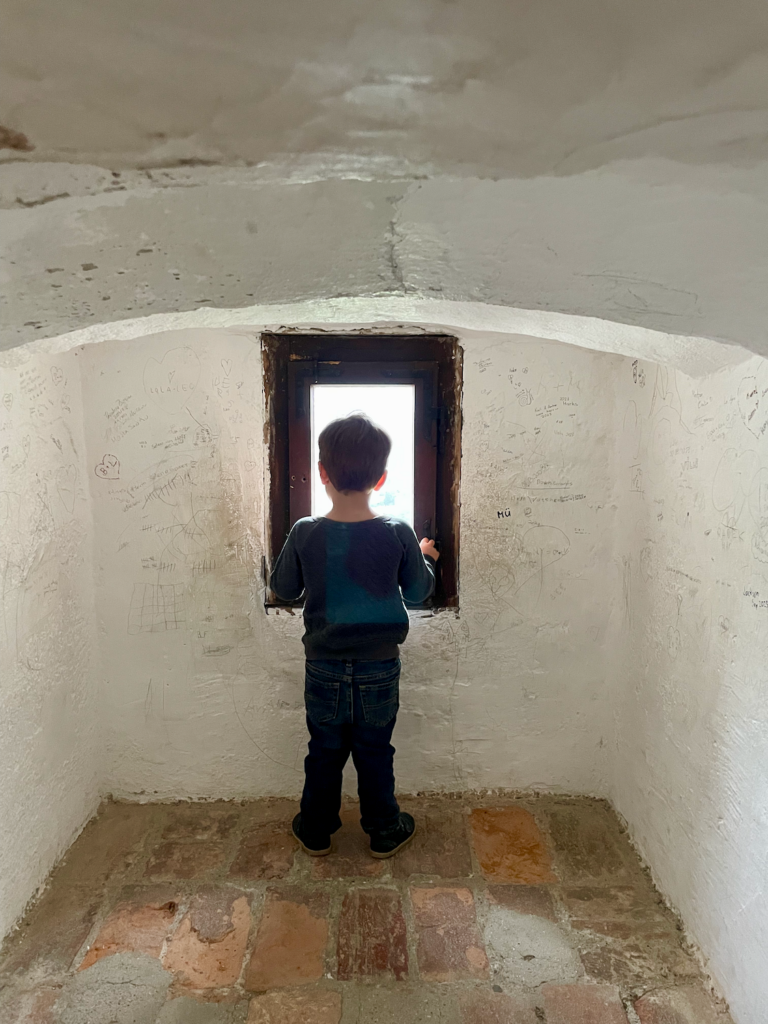
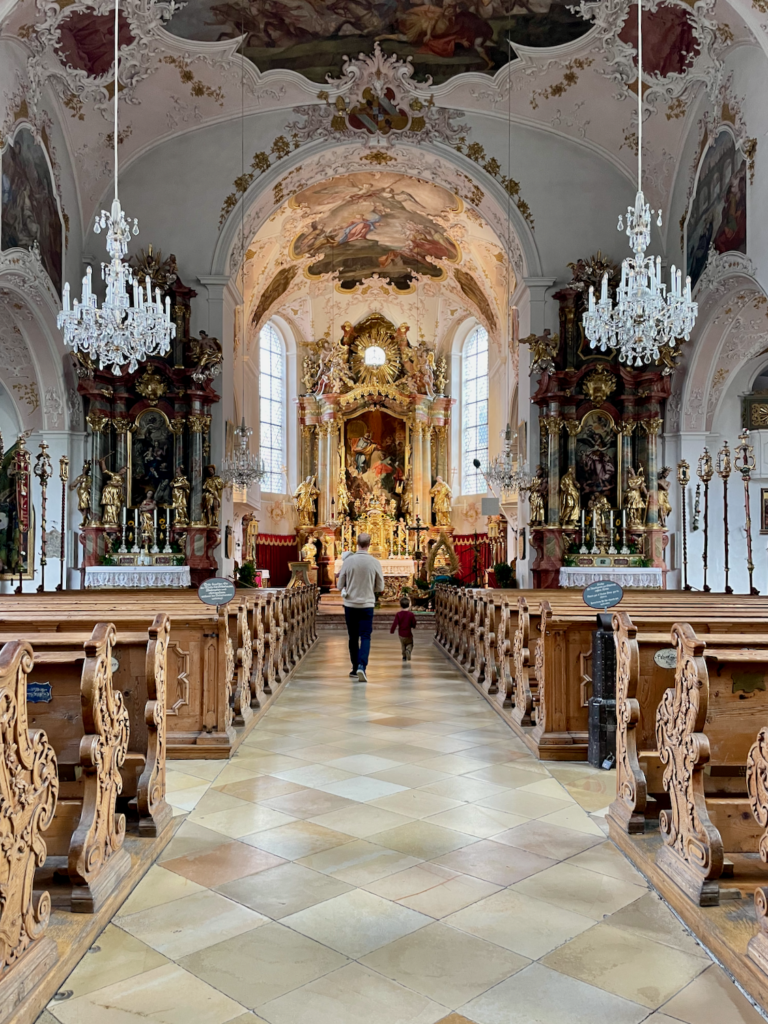
If we are visiting a more adult-oriented site and have a stroller with us or plan to baby wear, nap time is the best time for us. In our early years of traveling with babies, my husband and I were able to utilize nap time to visit museums and historic sites the way we had pre-kids. Think fine art museums, churches, palaces, etc. We would make sure to enter the museum right as our little ones were getting tired or drifting off to sleep. Sometimes we would play some music through kid headphones to lull our toddlers to sleep and bounce babies to sleep in front packs. This allowed us to fully enjoy audio tours of places like Schönbrunn Palace in Vienna and Westminster Abbey in London while we pushed our sleeping babies in strollers.
If you have some non-nappers, maybe pop into a museum during the younger ones’ nap time and spend some focused one-on-one time looking at a few of the museum’s highlights for a short while. Again, I am constantly amazed by my children’s capacity to absorb information and appreciate art and culture. But it usually requires me giving direct attention to that child and my help interpreting what they are seeing to make it accessible to their young but curious minds.
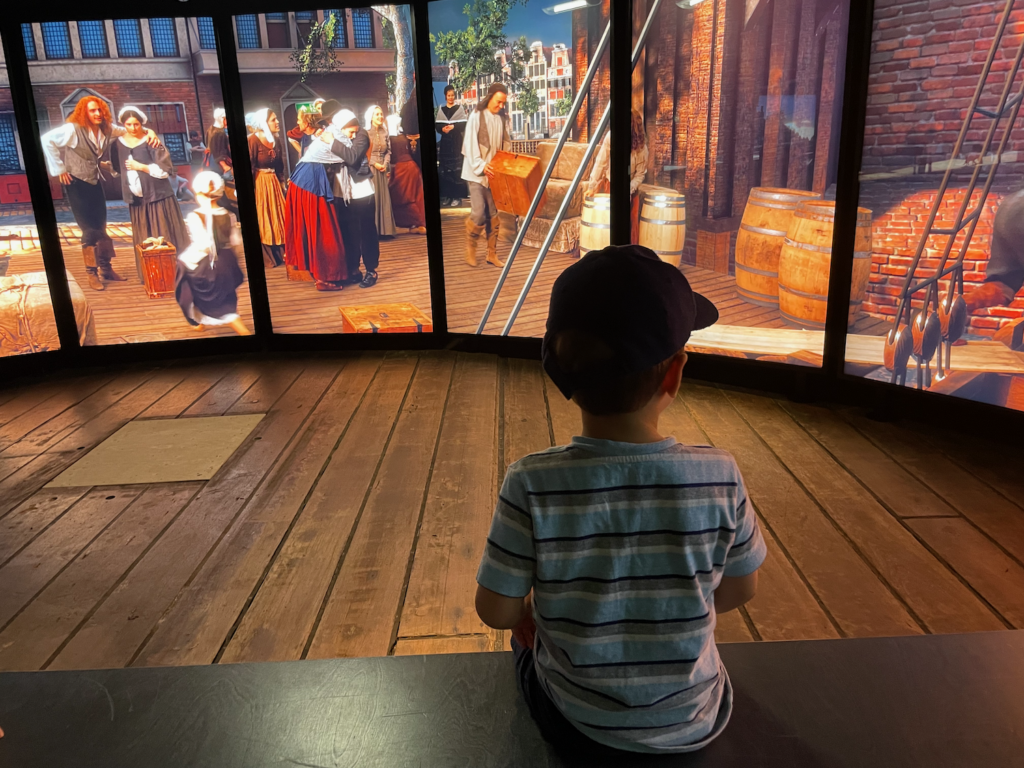
Alternatively, most places have an abundance of child-friendly sites that you can enjoy with your young family. When we were last in Amsterdam, for example, we visited so many museum and sites that I had overlooked on previous adult-only visits to the city. The Anne Frank Museum was too heavy for my young children, but the National Maritime Museum, with a full-size replica of a merchant ship, was perfect! Museums like the VASA in Stockholm and heritage sites like Zaanse Schans in the Netherlands are all great for families. They can expose young children to so much history, culture, and art while keeping them entertained.
3. Research the site ahead of time
Researching the various exhibitions that a museum or historical site offers can be very helpful. Often I can find useful information about the site from other families online. For example, which aspects of the site are most interesting for the kids. How long did it take other families to tour the parts that I want to tour. Food or bathroom availability, and more. By doing some research ahead of time you can plan what you want to hit and prioritize your time accordingly.
4. Set a time limit for your visit ahead of time
2-3 hours is usually our family’s max when visiting a museum or historical site. Coming back another day is always an option, or even later that afternoon. But usually by 2-3 hours everyone is hungry and needing a break, and probably a rest/nap. With a time limit in mind, you can prioritize the things you don’t want to miss and fit in more if you have time.
5. Visit the information desk
Even if I have researched the place ahead of time, I usually head to the information desk when we first arrive to find out what might be most interesting for kids. The staff can help you make the most of your visit and let you know what exhibits are closed that day or if there is something special being offered that day. The British Museum in London, for example, has a Families Desk that is open certain days. Many places offer audio tours and activities specifically designed for kids.